
Posted on 2026-10-07
Planning safe home EV charging in Poole
Electric vehicles are becoming increasingly common across the UK, and many households are considering how to charge a vehicle conveniently and safely at home. Installing a dedicated home charging unit is the most practical solution for most owners, but the electrical work involved requires a proper assessment of the existing installation before anything is fitted. There are two broad approaches to charging an electric vehicle at home. The first is using a standard 13-ampere socket with a cable supplied by the vehicle manufacturer. This is generally slower than a dedicated charge point. Use only equipment approved by the vehicle and cable manufacturers, with a suitable installation assessed for the load; an ordinary socket is not automatically suitable for sustained charging. Electrical Safety First advises that dedicated, properly installed charging equipment is the preferred approach for regular home charging (https://www.electricalsafetyfirst.org.uk/safety-advice/products-and-appliances/transport/electric-vehicles/). The second and recommended approach is a dedicated charging unit, sometimes called a wallbox or home charger, connected to the property's electrical installation by a separate circuit from the consumer unit. Before a home charger can be installed, a qualified electrician will assess the condition and capacity of the existing installation. This typically includes checking suitable compatible circuit and enclosure arrangements, assessing the earthing arrangement, and checking whether the incoming supply has sufficient capacity for the charger's output. Lack of a spare way does not automatically require complete consumer-unit replacement; a suitable separate enclosure or other arrangement may be possible. The assessment also covers where the charging unit will be positioned and how the cable route from the consumer unit will be managed. The dedicated circuit for the charger must be correctly sized, fitted with a suitable overcurrent protective device, and provided with the required residual-current protection and suitable arrangements for DC residual current. Earthing and any required protection against supply faults must also be assessed. The charger's internal protection and manufacturer's instructions affect the external protective devices required, and the installing electrician will confirm these requirements before beginning the work. Installing a new dedicated circuit for an EV charger is notifiable work under Part P of the Building Regulations in England. A registered competent person may self-certify within scheme scope; otherwise the appropriate building-control route must be arranged. On completion, the electrician should issue an Electrical Installation Certificate confirming the circuit has been tested and meets BS 7671. A separate compliance or completion record is produced through the applicable notification route. These are distinct documents and both are worth retaining for your records and for any future property transaction. Most home chargers are fitted on an external wall or within a garage or carport. Outdoor installations must use equipment with suitable protection against water ingress for the installation environment, and the unit should be positioned so that the charging cable can reach the vehicle without creating a trip hazard across a doorway or footpath. If the vehicle is usually parked on a shared driveway or a public road rather than a private off-street space, the cable management arrangements are more involved, and the layout must be discussed before work begins. Do not run a cable across a public pavement merely because it can be covered. Applicable highway or council consent, planning conditions and landlord or property-owner permissions must be resolved. Supply equipment and any necessary capacity work also need the appropriate network operator or supplier involvement. Before the engineer visits, it helps to know the location of the consumer unit and the planned position for the charging unit. If you have already chosen a specific charger model, noting the make and model allows the engineer to confirm the circuit requirements in advance. Clearing access around the consumer unit and the proposed charger location will help the work proceed smoothly. Enquiries for [EV charger installation](/ev-charger-installation) across Poole and the surrounding area can be submitted through this site.
Signs your installation may need attention before EV charger installation
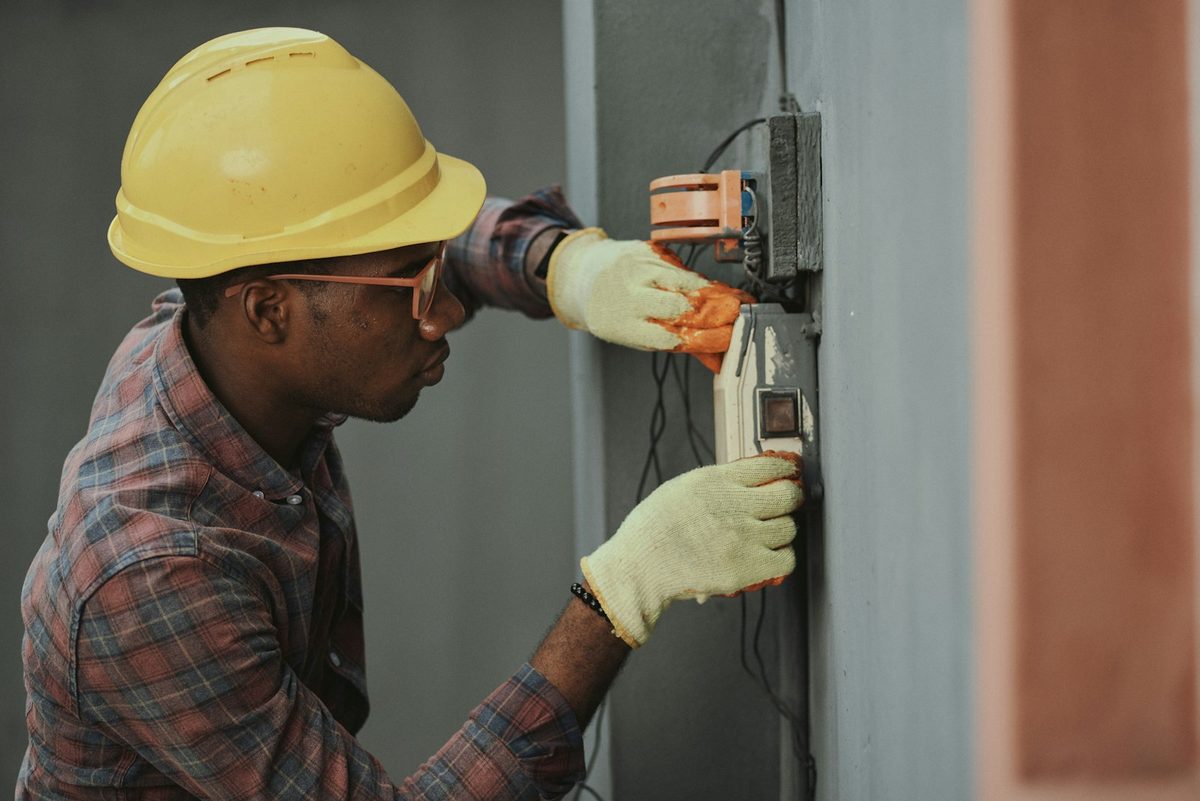
Older consumer unit or fuse board
Board condition, compatible protection and space need assessment. An older board or lack of a spare way does not automatically require complete replacement; a suitable separate enclosure or other circuit arrangement may be possible.
Earthing arrangement concerns
The electrician must establish the actual earthing arrangement and suitable protection, including any required protection against supply faults. Requirements differ between installations and charger designs; a neighbourhood or TT label alone does not identify a single additional device.
Limited incoming supply capacity
Available supply capacity and the existing load need assessment. Load management may be possible, or network-operator or supplier work may be required. The electrician must not open or alter sealed supply equipment without the responsible operator's authority.
Steps in arranging a home EV charger installation
Initial enquiry and site assessment
Submit the actual parking and installation details for assessment. Once scope, availability and charges are agreed, the qualified electrician checks the installation, circuit route, enclosure, protection and any relevant permissions before work begins.
Circuit installation
The qualified electrician installs the suitable dedicated circuit with compatible overcurrent and residual-current protection, DC residual-current arrangements and appropriate earthing or supply-fault protection, following the manufacturer's instructions and current requirements.
Charger fitting and commissioning
The charging unit is mounted and connected to the dedicated circuit. The electrician tests the complete installation to confirm it meets BS 7671 and that the charger operates correctly before the visit is completed.
Certification and notification
The new circuit receives an Electrical Installation Certificate. Notifiable work follows a registered competent-person scheme within scope or the appropriate building-control route, producing a separate compliance or completion record. Retain both applicable documents.
Related Services in Poole
Related Guides
Sources
- Electrical Safety First guidance — https://www.electricalsafetyfirst.org.uk/safety-advice/products-and-appliances/transport/electric-vehicles/